On this page
Pick Sourcegraph to search and change code across thousands of repositories; pick repowise to understand a codebase, see where changing it is risky, and give coding agents that context. Sourcegraph is a commercial code search platform with regex and structural search, SCIP-based code navigation and Batch Changes. repowise is an open-source index that builds docs, a dependency graph, git ownership, hotspots, code health and decisions, and serves them through ten MCP tools.
Sourcegraph details are as of October 2026, from Sourcegraph's pricing page, code search docs and MCP docs. repowise details are from release 0.56.
repowise vs Sourcegraph at a glance
Sourcegraph answers "where is this?"; repowise answers "what is this, who owns it and is it safe to change?".
| Sourcegraph | repowise | |
|---|---|---|
| What it is | Code search and navigation platform | Codebase intelligence engine |
| Licence | Proprietary | AGPL-3.0 |
| Pricing | Enterprise plan from $16K a year (minimum), per the pricing page | Free to self-host; hosted Free covers two public repositories, private repositories on Pro |
| Deployment | Single-tenant cloud or self-hosted | pip install repowise on your machine or CI; also hosted at repowise.dev |
| Search | Regex, boolean, structural and symbol search; natural-language query assist | Semantic and keyword search over the wiki, symbols and paths (search_codebase) |
| Scale | Many repositories across many code hosts | One repository or a workspace of related repositories |
| Batch refactors | Batch Changes opens pull requests across repositories | Not a goal; agents and developers make the edits |
| Documentation | None generated | A wiki page per file, symbol, subsystem and API surface |
| Git history | Commit and diff search | Ownership, bus factor, hotspots, co-change, bug-fix history |
| Code health, dead code | Not part of the product | Per-file health scores, a Fix first queue, dead code by confidence tier |
| Change risk | Not part of the product | get_change_risk scores a commit or diff range |
| Agent access | MCP server on Enterprise | Ten MCP tools on a local index |
| Languages | Any language, as text | 27 parsed to a full AST, 14 at the Full tier |
Scroll the table sideways to see every column.
What Sourcegraph does well
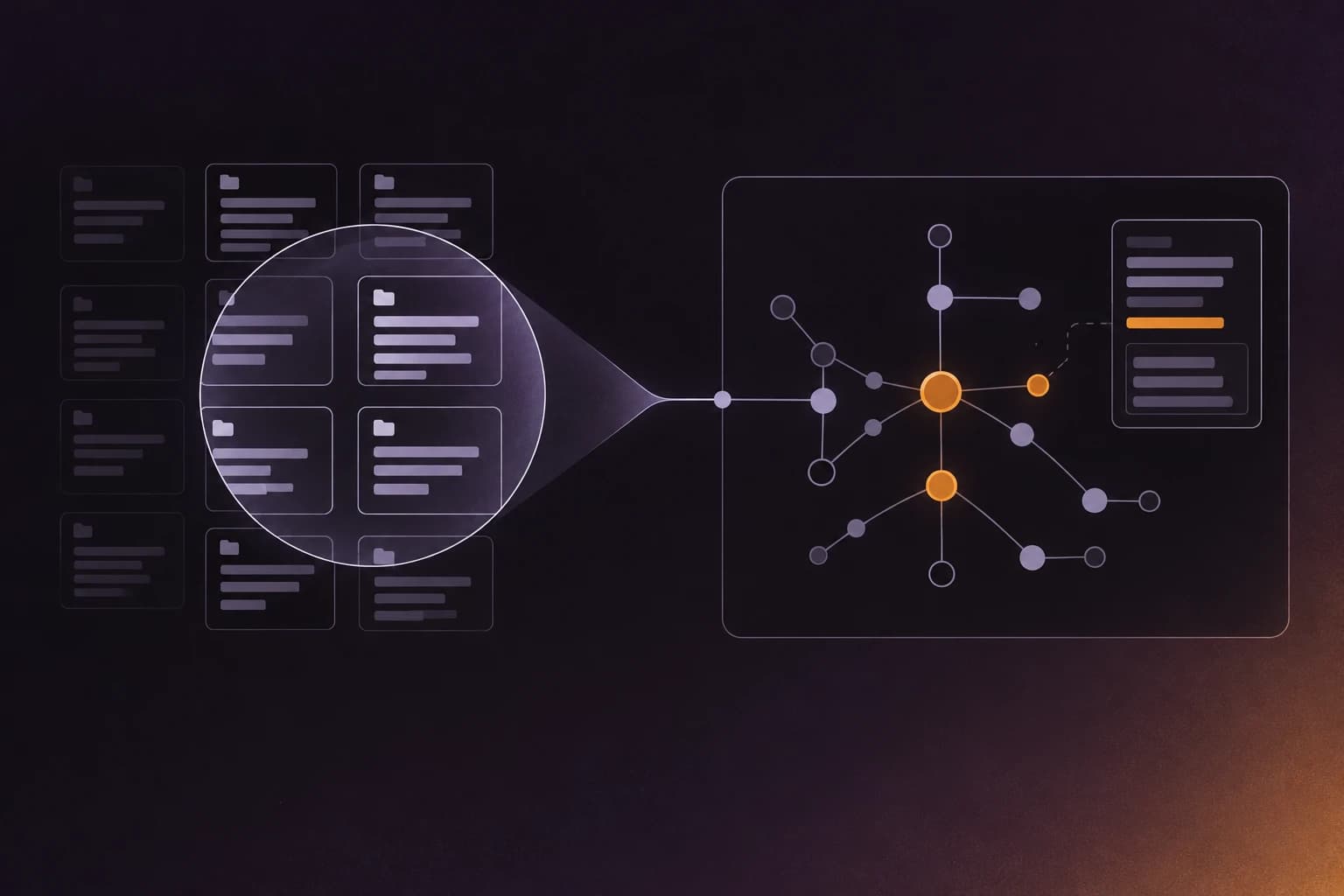
Sourcegraph is the reference product for finding code across a large estate. Its code search covers regular expressions, boolean operators, structural search, symbol, commit and diff search, across branches and commits and across code hosts.
Code navigation. SCIP indexes give precise go-to-definition and find-references in the browser, across repositories, with the precision of a local IDE.
Batch Changes. A platform team can find a pattern and open pull requests that change it across hundreds of repositories, then track them to merge. For a library migration or a security fix across many services, nothing in this comparison replaces it.
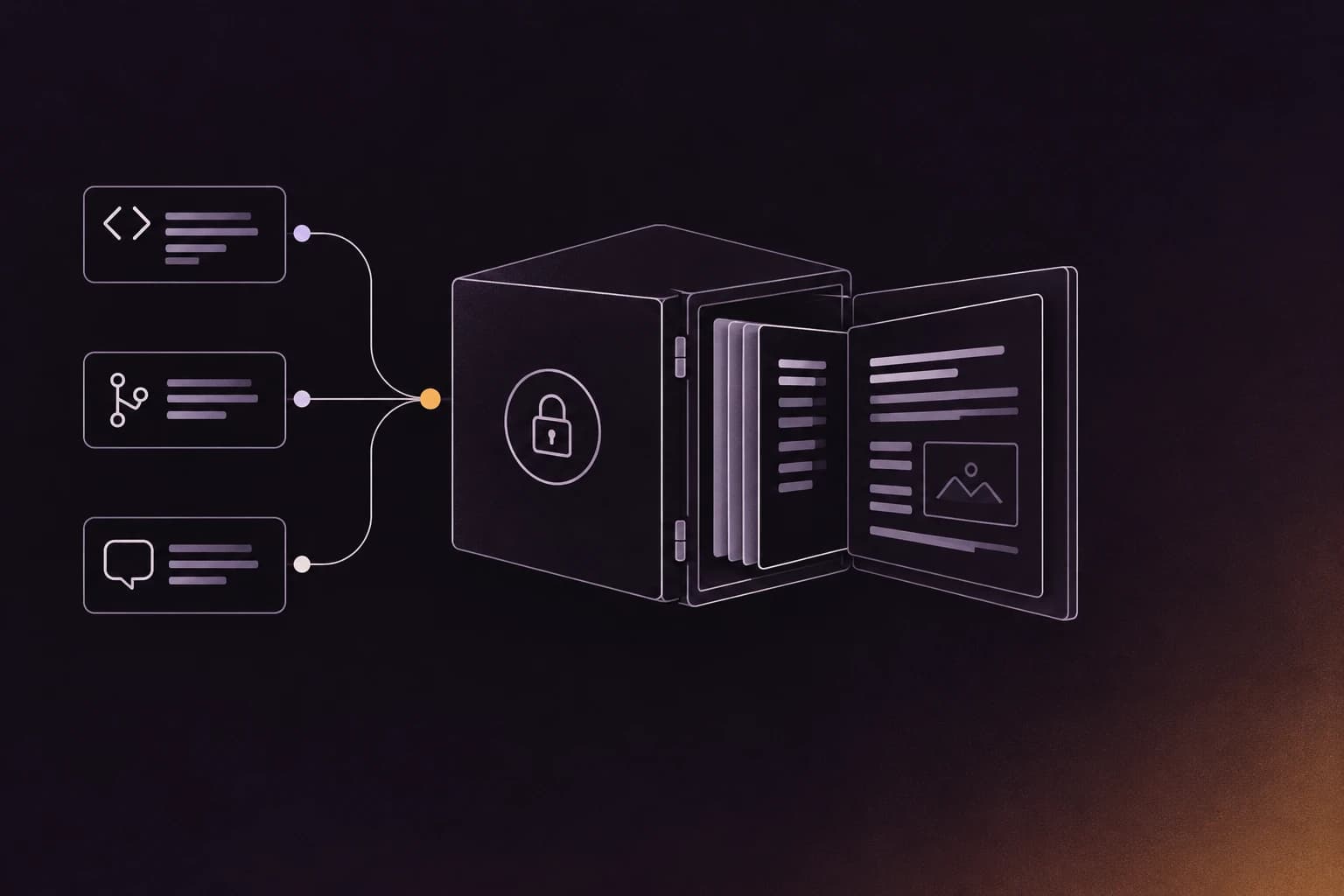
An MCP server for agents. On Enterprise plans, the Sourcegraph MCP server exposes keyword_search, nls_search, go_to_definition, find_references, commit_search, diff_search, read_file and a deepsearch agent, with administrator controls over which tools are enabled. Agents get precise search over everything the instance indexes.
What repowise adds
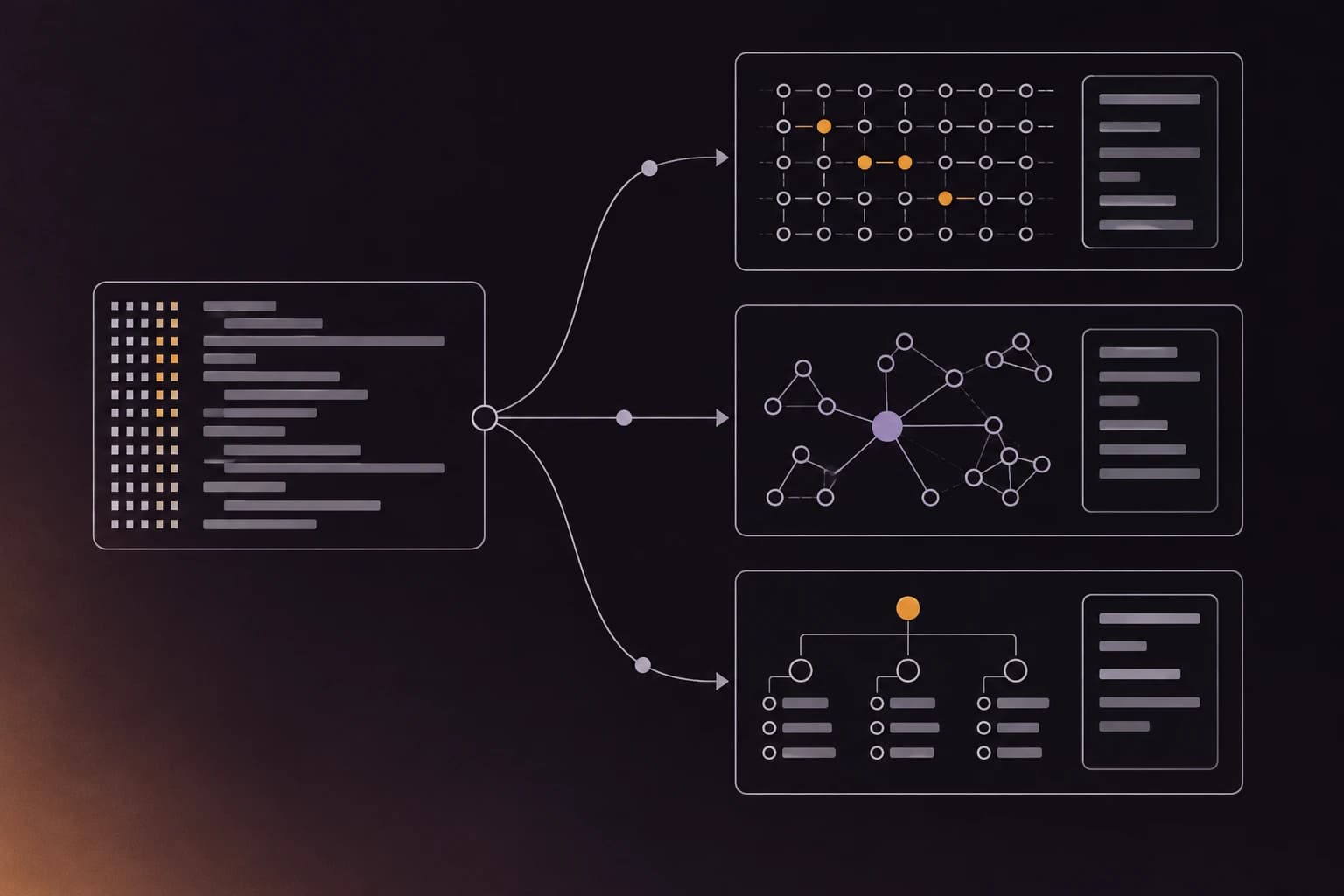
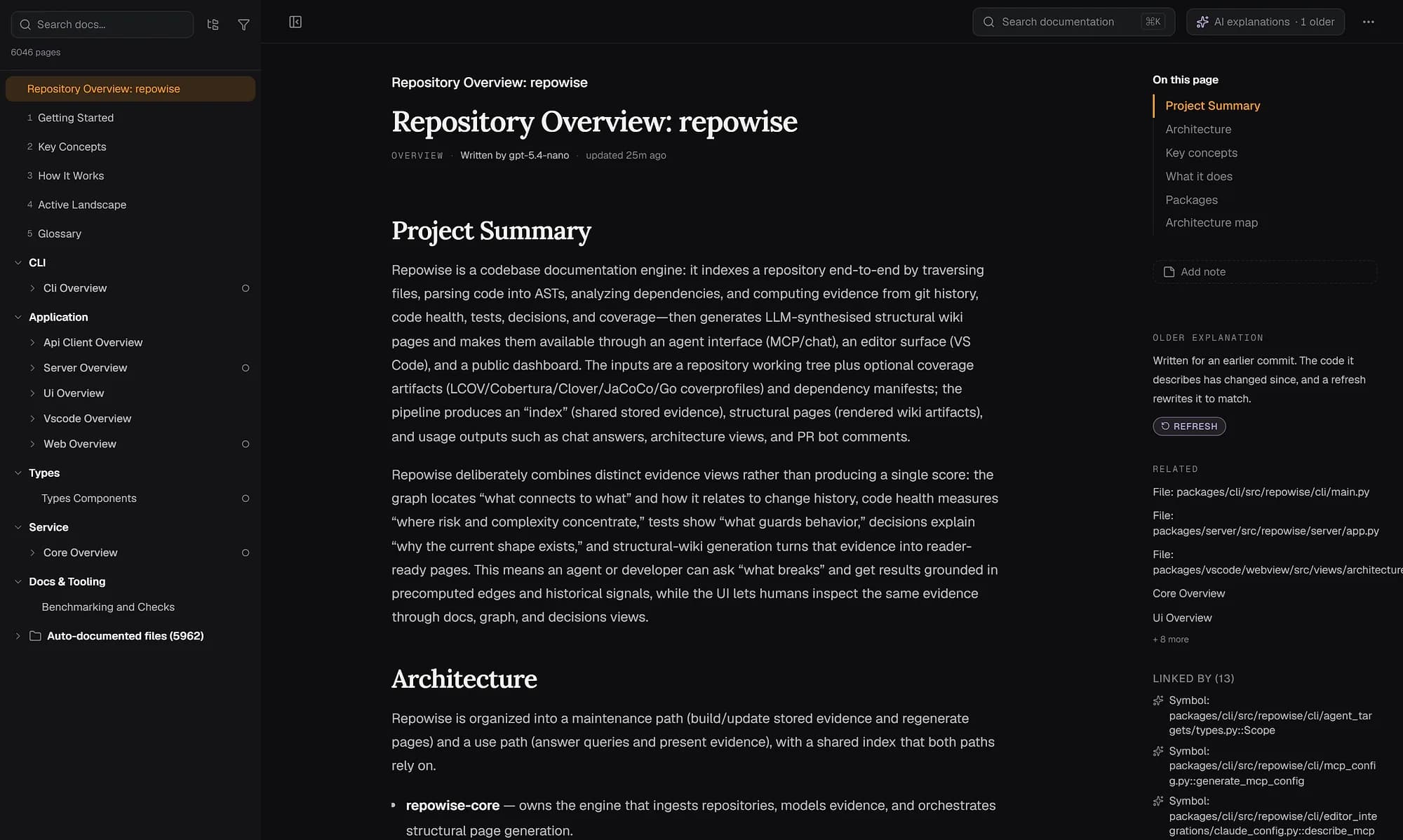
repowise indexes a repository once into a code graph and its git history, then reads that index as docs, a health report, an ownership map and agent tools. The graph, git, health and dead-code layers make no model calls.
Docs for every file, symbol and subsystem
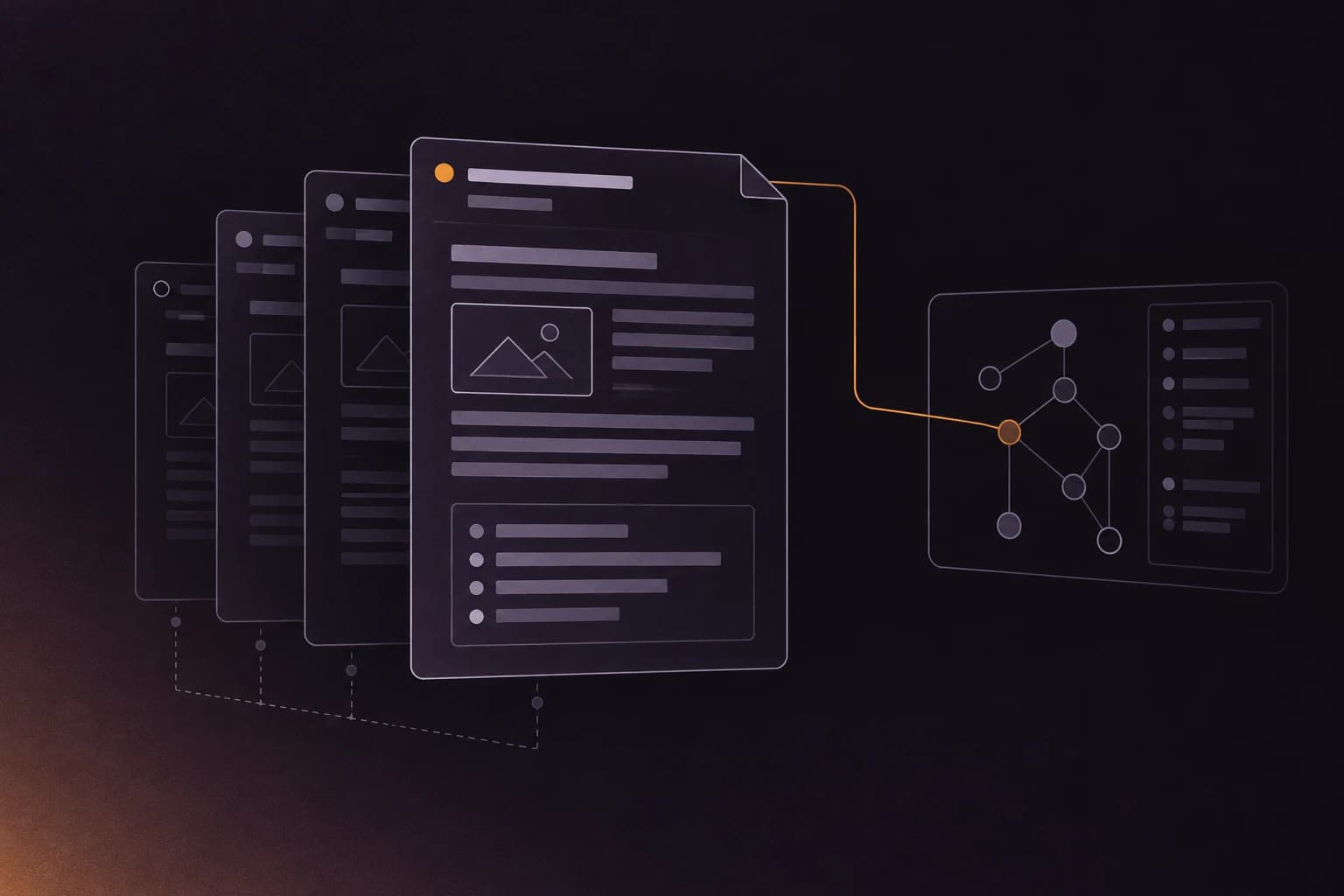
repowise renders a wiki from the code's structure: a page per source file, selected public symbol, subsystem, dependency cycle, infrastructure file and API surface. repowise init --no-prose builds it with no API key; a provider key (Anthropic, OpenAI, Gemini, OpenRouter, LiteLLM or local Ollama) adds model-written prose to subsystem and overview pages. Each page carries a freshness status of fresh, stale, expired or unknown, and repowise update re-renders only what your commits touched. See the wiki feature page.
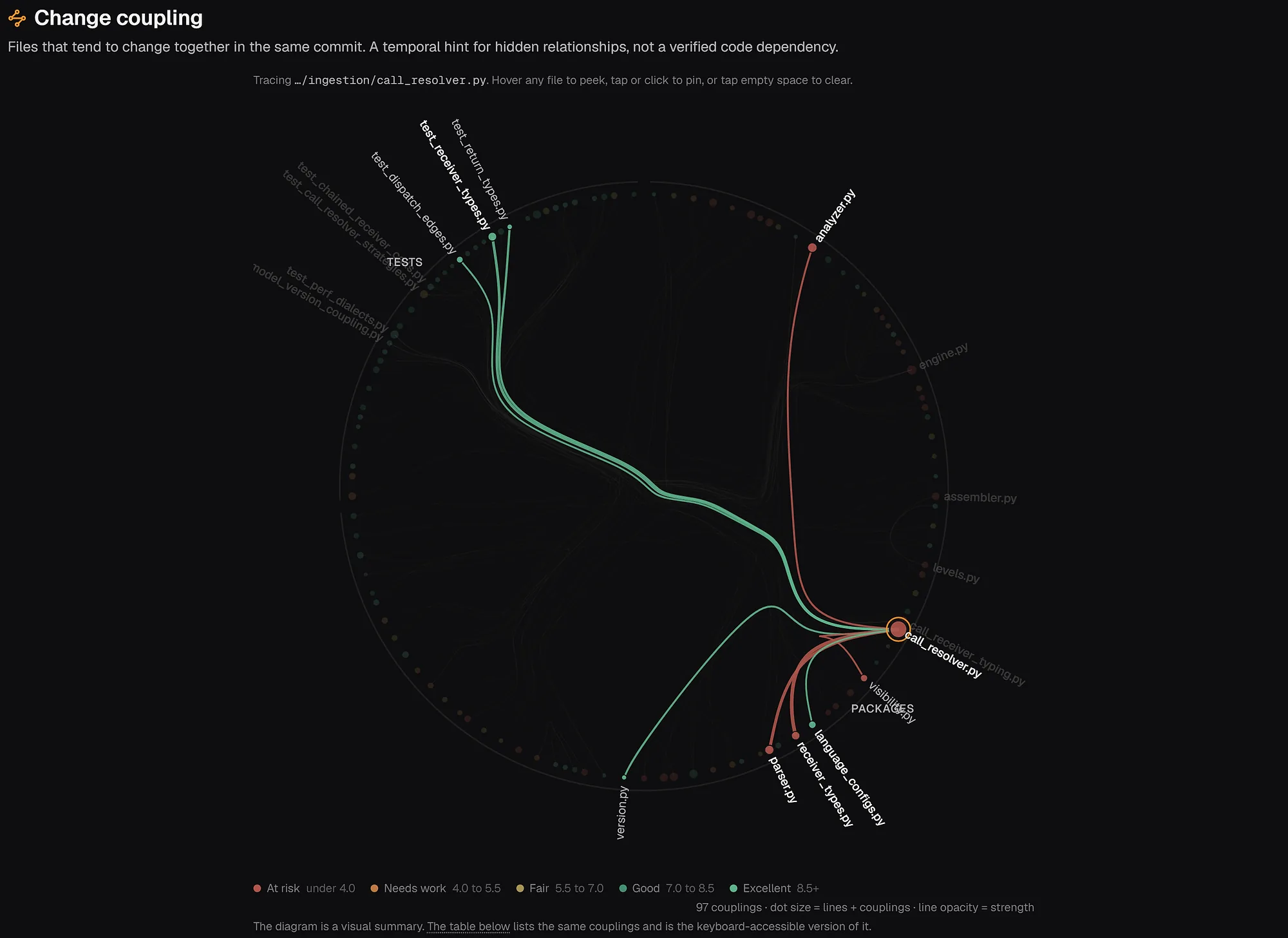
Git ownership, hotspots and co-change
From git log and git blame, with no model and no network, repowise records who owns each file and module, the bus factor behind it, which files are hotspots (complex and often changed) and which files change together with no import between them. Sourcegraph can search commits; it does not compute a risk model from them. The FastAPI ownership map shows the result on a live public index, and git intelligence explains the signals.
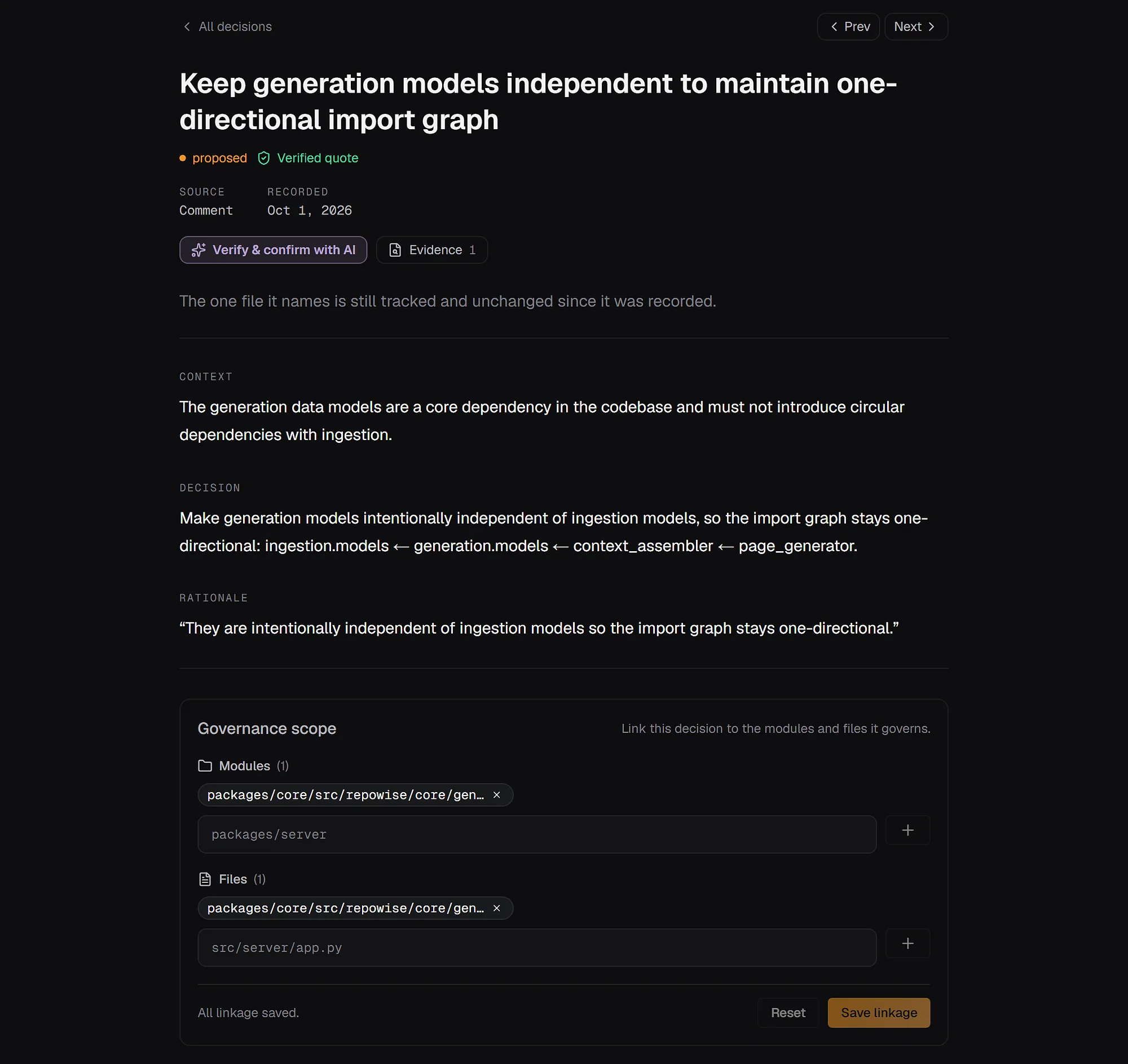
Code health, dead code and decisions
Every file is scored from 1 to 10 for defect risk, maintainability and performance by deterministic detectors, and a Fix first queue ranks what to change and which tests to run. Scored before the bug window, the defect score predicts which files get bug-fixed over the next six months with a ROC AUC of 0.74 across 21 repositories, per our published benchmarks. Dead code is reported by confidence tier from the dependency graph, and the decisions layer ties ADRs, # WHY: comments and PR history to the code they govern. The FastAPI code health page shows all of it.
Ten MCP tools built for change safety
repowise serves the index over MCP as ten tools: get_answer, get_context, get_symbol, search_codebase, get_risk, get_change_risk, get_why, get_overview, get_health and get_dead_code. Sourcegraph's tools return search hits and navigation; these return callers with confidence, ownership, risk, health findings and the decision behind a file. get_change_risk scores the defect risk of a commit or diff range from the shape of the change, before merge. repowise init registers the server with Claude Code, and repowise mcp starts it for any other MCP host. See repowise for AI agents.
Which one to pick
Pick Sourcegraph if:
- You search and refactor across hundreds or thousands of repositories and code hosts.
- You need structural search, SCIP navigation or Batch Changes at that scale.
- Your agents need precise search across an enterprise estate through its Enterprise MCP server.
Pick repowise if:
- You want docs, ownership, hotspots, code health and dead code without running a cluster.
- Your agents should check context and change risk before editing, on private code, locally.
- You need an open-source tool with no seat limits that runs offline with Ollama.
Use both if you run a large estate. Use Sourcegraph to find every occurrence of a deprecated API and drive the migration, and repowise to onboard engineers to a service, rank where the debt sits and hand agents a structured map. Both are MCP servers, so one agent can query each.
Try it on your repo
Index a repository you already search in Sourcegraph and compare what each tells you:
pip install repowise
repowise init --no-prose        # graph, git history, wiki, MCP registration; no API key
repowise serve                  # browse docs and dashboards at localhost:3000
repowise mcp                    # serve the ten MCP tools to Cursor or any MCP host
Or paste a public GitHub URL on the repowise homepage and read the result with no account. See live examples and the Sourcegraph alternative page.
FAQ
- Is repowise a replacement for Sourcegraph?
- For understanding a codebase, yes: docs, ownership, health and agent tooling come from one local index. It is not a replacement for cross-repository search or Batch Changes across a large estate, where Sourcegraph is the specialist.
- How much does Sourcegraph cost?
- As of October 2026, Sourcegraph's pricing page lists an Enterprise plan from $16K a year, deployed as single-tenant cloud or self-hosted. repowise is free to self-host under AGPL-3.0; its hosted Free plan covers two public repositories and private repositories are on Pro.
- Does Sourcegraph have an MCP server?
- Yes, on Enterprise plans. It exposes search, go-to-definition, find-references, commit and diff search and a Deep Search agent. repowise has its own server with ten tools covering docs, risk, health, decisions and dead code.
- Can I self-host repowise?
- Yes.
pip install repowiseandrepowise initwrite the index to.repowise/beside the repository. With a local Ollama model, or--no-prose, nothing leaves your network. - What languages does repowise support?
- 27 languages are parsed to a full AST, and 14 are at the Full tier, per the language support doc.